Key takeaways
- Compare the best fixed blade broadhead for compound bow hunting: five proven 100-grain heads, cut sizes, blade counts and tuning notes to pick one.
A fixed blade broadhead is the simplest contract a compound bow hunter can make with an arrow: nothing moves, nothing deploys, nothing can fail to open. The real decision is not fixed versus mechanical in the abstract, but which fixed head flies like your field points, punches through the game you hunt, and still leaves a blood trail you can follow in fading light. Cut size, blade count, ferrule material and grain weight all pull in different directions, and the head that wins on penetration is rarely the one that wins on wound size.
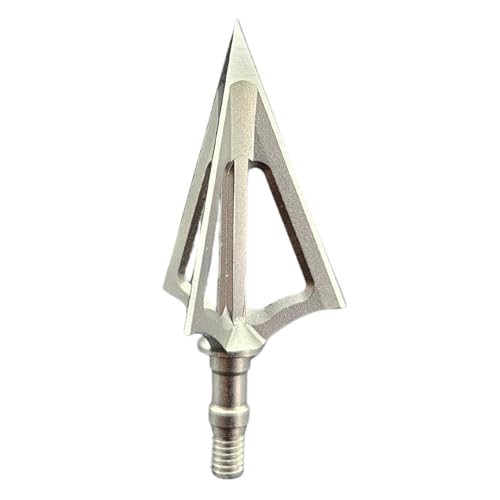

This article is for compound bow hunters choosing a fixed blade head for deer, elk or hogs, from a first-time buyer setting up a first hunting arrow to an experienced archer replacing a head that never tuned cleanly. Every product below is a true fixed blade broadhead in 100 grains, chosen from names and specs on Amazon product pages, with cut size, blade thickness and pack size taken from the listing or the maker’s spec sheet.
Quick Picks
As an Amazon Associate we earn from qualifying purchases
| Product | Best for | Key spec from title |
|---|---|---|
| G5 Montec 100 Grain | Hunters who want a one-piece head that never comes apart | One-piece stainless steel, 3 blades |
| QAD Exodus Full Blade 100 Grain | Short, compact heads that fly like field points | 1-1/4 inch cut, blades over shaft |
| Slick Trick Magnum 100 Grain | Four-blade wound channels and big blood trails | 4 blades, 1-1/8 inch cut |
| NAP Thunderhead 100 Grain 5-Pack | Stocking a full quiver on a budget | 5 heads, Diamize sharpened blades |
| Muzzy MX-3 100 Grain | A light, fast fixed blade at a low cost per head | 1-1/4 inch cut, aluminum ferrule |
How to Choose
Blade count and cut size
Three blades give a triangular wound and the best penetration for a given draw weight, because the head meets less resistance as it passes through tissue. Four blades cut a wider cross-shaped channel and leave a heavier blood trail, but they ask more of your arrow’s energy and can plane in a crosswind if the bow is not tuned. Cut size follows the same trade: a 1 inch head flies closest to a field point, while a 1-1/4 inch head opens a bigger hole and demands a stiffer arrow spine. Match the cut to the game and the draw weight, not to the biggest number on the box.
Grain weight and arrow spine
One hundred grains is the standard weight for a compound bow hunting head, and it is the weight every head in this article carries. The grain weight sets the arrow’s front-of-center balance, and changing it changes how the arrow flexes out of the bow. A head that is heavier than the field points you sighted in with will group low and left or right, so sight in with the exact head you plan to hunt with, or with a practice head of the same weight. If your arrows are already at the soft end of the spine chart, a heavier head will only make the tuning worse.
Ferrule and blade construction
A one-piece head has no joints to loosen and no blades to replace, which is why the Montec survives bone hits that bend replaceable-blade heads. Replaceable-blade heads cost less per shot over a season, because you swap dull blades instead of the whole head, but every blade seat is a place for wobble to start. Steel ferrules take abuse and add weight up front; aluminum ferrules keep the head light and fast but dent more easily on a hard hit. Check whether the blades are held by screws, a locking ring or a friction fit, and carry spare blades in the field.
Tuning before the season
A fixed blade steers the arrow from the front, so a bow that groups field points well can still throw broadheads several inches off at 30 yards. Spin each assembled arrow on a flat surface or a spin tester and watch the tip: any wobble means the head is not seated square, and no amount of sight adjustment fixes that. Then shoot the broadhead at the same distances you will hunt, and move the rest in tiny steps until broadheads and field points share a group. Do this weeks before opening day, not the night before, because a rest move changes everything downstream.
The 5 Best Options
G5 Montec 100 Grain
The Montec is the fixed blade other fixed blades get measured against, and its appeal is having no parts: a single piece of stainless steel, shaped by metal injection molding into three blades and a cut-on-contact tip, with nothing to assemble, replace or lose in the quiver. Pick it when penetration matters more than cut size, and when you want to sharpen the same head and hunt with it again next season. The trade is a modest 1-1/16 inch cut by the Amazon listing title, so the wound channel is narrower than the four-blade heads here, and blood trails can be lighter on a high hit.
Specs
- One-piece stainless steel construction, metal injection molded
- 3 fixed blades with a cut-on-contact tip
- 100 grain weight, 3-pack
- 1-1/16 inch cutting diameter per the Amazon listing title
- Available in 85, 100 and 125 grains
- Resharpenable blades, spin-tested for balance
- Best for: Hunters who want a one-piece head that survives bone and sharpens for another season.
- Watch out for: Roundups disagree on the cut size, with some listing 1-1/8 inch instead of 1-1/16 inch — confirm the listing title before ordering.
QAD Exodus Full Blade 100 Grain
The Exodus looks wrong until you shoot it: a short, stubby head with the blades swept back over the shaft, built so a shorter head steers less and flies closer to a field point. The full blade version cuts 1-1/4 inches with blades .040 inch thick and a stainless steel tip, and the compact profile groups well from fast modern compounds that punish long heads in a crosswind. It comes only in 100 grains in the full blade version, so archers who need a heavier or lighter head must look elsewhere, and the assembly is fiddlier than a one-piece head because the blades and tip come apart for cleaning.
Specs
- 3 fixed blades with a blades-over-shaft design
- 1-1/4 inch cutting diameter, .040 inch blade thickness
- Stainless steel tip
- 100 grain weight, 3-pack
- Part number BD100-F, black finish
- Compact short profile for field-point-like flight
- Best for: Compound shooters who want a short head that holds its group at longer ranges.
- Watch out for: The full blade version comes only in 100 grains, and the Deep Six version is a separate listing that some retailers show as discontinued.
Slick Trick Magnum 100 Grain
The Magnum is the four-blade answer to the blood trail problem: four German-made Lutz blades, each .035 inch thick, locked into a Super Steel ferrule by the Alcatraz bladelock system, cutting a 1-1/8 inch hole with a total cut of 2-1/4 inches across both blade pairs. That cross-shaped wound is harder for muscle to close over, which is why hunters who have lost a deer to a faint trail reach for a four-blade head. The cost is drag: four blades ask more of the arrow than three, so the Magnum rewards a well-tuned bow and a stiff spine, and it punishes a soft arrow with planing at distance.
Specs
- 4 fixed blades, .035 inch Lutz stainless steel
- 1-1/8 inch cutting diameter, 2-1/4 inch total cut
- Alcatraz bladelock system holds blades in place
- Super Steel ferrule with a four-edge bone-splitting tip
- 100 grain weight, 4-pack
- Available in 100 and 125 grains
- Best for: Hunters who rank a heavy blood trail above maximum penetration.
- Watch out for: Confirm the 100 grain 4-pack listing live, since Slick Trick also sells the Standard with a narrower 1 inch cut and a Pro Series version under similar names.
NAP Thunderhead 100 Grain 5-Pack
The Thunderhead is the old name in this group, and it is sold because the design has not needed changing: three replaceable blades on a micro-grooved Slimline ferrule, Diamize sharpened, with no lock rings or O-rings to lose. The 100 grain version cuts 1-3/16 inches, and the five-piece set covers a full quiver with spares for practice, making it the cheapest cost per head here. The blades are thinner than the Exodus or the Magnum, so they dull quicker on bone, and the set is a value buy rather than a premium one, but for a hunter who wants proven heads without a premium outlay it is hard to fault.
Specs
- 3 fixed replaceable blades, Diamize sharpened
- 1-3/16 inch cutting diameter
- Micro-grooved Slimline ferrule, no lock rings or O-rings
- 100 grain weight, 5-piece set per the Amazon listing title
- Model 60-150
- Replacement blades available
- Best for: Hunters who want five proven heads for the cost of three premium ones.
- Watch out for: Some retailers list this model as a 6-pack, while the Amazon listing title says 5 pieces — confirm the pack count on the listing before ordering.
Muzzy MX-3 100 Grain
The MX-3 is Muzzy’s light, fast fixed blade, built on an anodized aluminum ferrule instead of the Trocar’s solid stainless ferrule, with three .025 inch stainless blades and a Trocar tip. The thin blades and short profile give it a 1-1/4 inch cut with less drag than a heavier steel head, which suits fast compounds and lighter draw weights, where penetration comes from speed rather than mass. The aluminum ferrule is the compromise: it keeps the head light, but it dents and bends sooner than steel on a hard bone hit, so treat the MX-3 as a head to replace after a tough shot, not one to straighten and reuse.
Specs
- 3 fixed blades, .025 inch stainless steel
- 1-1/4 inch cutting diameter
- Anodized aluminum ferrule with a Trocar tip
- 100 grain weight, 3-pack
- Model 225-MX3-3
- Replacement blades available
- Best for: Fast compound setups and lighter draw weights where speed does the work.
- Watch out for: Do not confuse the MX-3 with the Muzzy Trocar model 290, which has a solid stainless steel ferrule, .035 inch blades and a 1-3/16 inch cut.
Which One Fits Your Situation
First compound bow, first fixed blade
Pick the G5 Montec. A first-time broadhead buyer has enough to learn without assembling blades or chasing a tune, and a one-piece head removes the variables: screw it on, spin test it, shoot it, and sharpen it after the season. The narrow cut is a fair trade for a head that cannot come apart in the quiver, and the Montec’s long record means any archery shop can help you tune it.
Whitetail from a stand, blood trail matters most
Pick the Slick Trick Magnum. Whitetail shots are often close and slightly quartering, and the four-blade cross cut leaves the kind of trail you can follow in low light through leaves. Sight in carefully, because the extra blades show up any tuning flaw, and carry spare blades since the Magnum’s edge is its willingness to cut wide.
Elk or hogs, penetration above all
Pick the QAD Exodus Full Blade. Big-bodied game and heavy bone reward a short, stiff head that does not steer, and the Exodus’s compact profile and thick .040 inch blades hold together where a wider head would deflect. The 1-1/4 inch cut still opens a serious wound, and the SST tip is built for the first thing the head meets, which on elk is often bone.
Stocking up without spending much
Pick the NAP Thunderhead 5-pack. Five heads cover a quiver and a practice round for less than a single three-pack of the premium heads, and the Thunderhead’s long service record means the design is proven rather than experimental. Check the pack count on the listing, shoot one head to confirm your tune, and keep the rest sharp for the season.
Common Mistakes
- Sighting in with field points only and never shooting the broadhead before opening day.
- Mixing grain weights between practice heads and hunting heads, which shifts the point of impact.
- Buying a crossbow-rated broadhead for a compound bow, or the other way around — the ferrule and blade design differ by bow type.
- Adding a heavier head to arrows that are already at the soft end of the spine chart.
- Hunting with dull blades, or reusing a head that hit bone without checking the blades and ferrule first.
Frequently Asked Questions
Are fixed blade broadheads better than mechanicals for a compound bow?
Fixed blades have no moving parts, so nothing can fail to open, and they penetrate better at lower draw weights and through bone. Mechanicals fly closer to field points and cut wider wounds, but they need enough kinetic energy to open reliably. For draw weights under 60 pounds, or for elk and hogs, most bowhunters pick a fixed blade for the margin it gives on a less-than-perfect hit.
What grain weight should I use on a compound bow?
One hundred grains is the standard for most compound setups, and it is the weight of every head in this article. Heavier heads add front-of-center weight and penetration but need a stiffer arrow spine, while lighter heads fly faster but hit with less momentum. Match the head to the field points you sighted in with, and confirm the spine chart for your draw weight and arrow length before changing weights.
Do fixed blade broadheads need special tuning?
Yes, more than mechanicals. A fixed blade steers from the front, so the arrow must be square and the rest must be set so broadheads and field points group together. Spin test every assembled arrow, shoot the broadhead at hunting distances, and move the rest in small steps until the groups match. A bow that groups field points well can still throw a fixed blade several inches off.
Can I reuse a fixed blade broadhead after a shot?
A one-piece head like the Montec can be resharpened and reused if the blades and tip are undamaged. Replaceable-blade heads can take new blades, but check the ferrule for bends first, because a bent ferrule will never spin true again. Any head that hit heavy bone should be checked closely, and when in doubt, replace it rather than risk a wounded animal.