Key takeaways
- Linen vs cotton bedding compared on breathability, softness, durability and care, with five sheet sets and a clear verdict for hot and cold sleepers.
- Top Pick: DAPU Pure Linen Sheets Set (King, White)
- Runner-up: SONORO KATE French Linen Sheet Set (King, Natural Linen)
- Also consider: Bedsure Organic Cotton Sheet Set (Queen)
If you sleep hot, want bedding that lasts for years, and like a relaxed, textured look, choose linen. If you want a smooth, soft feel from the very first night, easier care, and more choice at lower tiers, choose cotton. That is the short answer. The longer answer depends on how you sleep, how you wash, and how you want your bedroom to look.
Linen is woven from flax fibres, which are hollow, naturally breathable, and exceptionally strong. Cotton is woven from shorter plant fibres that feel softer straight out of the packet but wear thinner over time. Both are natural, both are comfortable, and both appear in the five sheet sets below — three linen, two cotton — so you can compare real specifications side by side before deciding.
As an Amazon Associate, we earn from qualifying purchases.
Table of Contents
- Quick Verdict
- Linen vs Cotton at a Glance
- The Key Differences
- The Linen Side: Three Sheet Sets
- The Cotton Side: Two Sheet Sets
- Who Should Choose Linen
- Who Should Choose Cotton
- FAQ
- Conclusion
- Product and ASIN Reference
Quick Verdict
Linen wins on temperature regulation, moisture handling, and long-term durability. Cotton wins on first-night softness, smoothness against the skin, wrinkle resistance in sateen weaves, and the sheer range of options at every tier. Neither fabric is objectively better; they suit different sleepers. Hot sleepers and buyers who keep bedding for a decade usually land on linen. Sleepers who prioritise a silky, hotel-style surface and simpler laundry usually land on cotton.
Linen vs Cotton at a Glance
| Factor | Linen | Cotton |
|---|---|---|
| Fibre source | Flax plant stalks | Cotton plant bolls |
| Breathability | Excellent; hollow fibres move air freely | Good; tighter weaves trap more warmth |
| Moisture handling | Absorbs and releases moisture quickly | Absorbs well, dries more slowly |
| Feel on night one | Textured, slightly crisp, softens over time | Smooth and soft immediately |
| Durability | Very high; flax is one of the strongest natural fibres | Moderate to high; depends on staple length |
| Wrinkle behaviour | Wrinkles readily; the creased look is part of the style | Sateen resists wrinkles better; percale creases lightly |
| Care | Gentle cold wash, low tumble or line dry | Standard machine wash and dry |
| Typical tier position | Mid-range to premium | Budget to premium |
| Best for | Hot sleepers, humid climates, long-term value | Smooth-feel fans, guest rooms, easy care |
The Key Differences
Breathability and Temperature
Linen is the cooler fabric. Flax fibres are hollow, so air passes through the weave instead of sitting against the skin, and the fabric pulls moisture away and releases it quickly. That combination is why linen sheets are marketed so heavily to hot sleepers and why linen bedding feels comfortable across a wider range of room temperatures. Cotton breathes well in a plain percale weave, but the smooth sateen weaves used in most premium cotton sets are denser, so they hold more warmth. If you regularly kick off the covers, linen has the clear edge. If you sleep cold and like bedding that feels cosy the moment you get in, cotton’s slight warmth is a point in its favour.
Feel and Texture
This is the difference you notice first. Cotton — especially long staple cotton in a sateen weave — feels smooth, even, and slightly silky from the first wash. Linen feels different: it has a visible weave, a light texture against the skin, and a relaxed drape. New linen can feel a little crisp, and it softens gradually with every wash rather than arriving at peak softness on day one. Some sleepers love that lived-in texture and find smooth cotton almost slippery by comparison; others never get used to it. If you know you dislike any texture in your sheets, cotton is the safer choice.
Durability and Lifespan
Flax is one of the strongest natural fibres used in bedding, and linen sheets are widely regarded as the longer-lasting option, often staying in service for many years of regular washing. Linen also tends to soften rather than thin as it ages. Cotton durability depends heavily on staple length: long staple and extra-long staple cottons resist pilling and hold up well, while short staple cotton pills and thins sooner. A well-made long staple cotton set, like the Pizuna set below, can last for years, but on pure fibre strength linen still takes this category.
Care and Wrinkle Behaviour
Cotton is the easier fabric to live with. Most cotton sets go through a normal wash and tumble dry cycle without special attention, and sateen cotton comes out of the dryer looking relatively smooth. Linen asks for a gentler routine: a cold, gentle wash, low tumble drying or line drying, and no bleach. Linen also wrinkles — that is simply what the fabric does. Many people treat the soft creasing as part of linen’s relaxed, farmhouse style, and it suits the casual bedding look popular in home decor right now. If a perfectly smooth, made-bed finish matters to you, cotton will frustrate you less.
Look and Bedroom Style
Because this choice is as much about decor as comfort, it is worth picturing the finished bed. Linen gives a matte, textured, slightly rumpled surface that pairs with natural wood, neutral palettes, and layered throws. Cotton sateen gives a smoother surface with a gentle sheen that suits a crisper, more tailored bedroom. Percale cotton sits between the two, with a matte finish but a smoother hand than linen. Neither look is better; they simply anchor different styles.
Cost and Value
Cotton sets exist at every tier, including genuinely inexpensive budget options, while pure linen sets cluster in the mid-range and premium tiers because flax is costlier to grow and weave. The value calculation is not one-sided, though: a premium linen set that stays in rotation for a decade can cost less per year than a budget cotton set replaced every couple of years. Judge by how long you plan to keep the set, not just the tier label.
The Linen Side: Three Sheet Sets
Simple & Opulence French Linen Sheet Set (Queen, Linen)
A straightforward pure linen set in a natural flax tone that works with almost any bedroom palette. The fitted sheet has a 15-inch pocket with elastic all the way around, and the fabric is certified to OEKO-TEX Standard 100.
Specs
- Material: 100 percent French flax linen
- Set contents: 4 pieces — flat sheet, fitted sheet, 2 pillowcases
- Flat sheet: 90 x 102 inches
- Fitted sheet: 60 x 80 inches with a 15-inch pocket and all-around elastic
- Pillowcases: 20 x 30 inches
- Certification: OEKO-TEX Standard 100
- Sizes: Twin, Full, Queen and King options in the same listing family
- Tier: Mid-range
DAPU Pure Linen Sheets Set (King, White)

DAPU weaves its sets from French linen grown in Normandy and positions them squarely at hot sleepers who want breathability without giving up a classic white bed. The four-piece set keeps the specification simple: pure flax, generous sizing, and a durable plain weave.
Specs
- Material: 100 percent French linen from Normandy flax
- Set contents: 4 pieces — 1 flat sheet, 1 fitted sheet, 2 pillowcases
- Size shown: King, White
- Weave: plain weave pure linen
- Certification: OEKO-TEX Standard 100
- Positioning: breathable, durable bedding aimed at hot sleepers
- Tier: Premium
SONORO KATE French Linen Sheet Set (King, Natural Linen)

The value route into pure linen. SONORO KATE uses 100 percent French linen with a deeper 16-inch pocket than most linen sets offer, plus stonewashing for a softer start. The care instructions are typical for linen: cold gentle wash, low tumble dry, no bleach.
Specs
- Material: 100 percent French pure linen
- Set contents: 4 pieces — fitted sheet, flat sheet, 2 pillowcases
- Size shown: King, Natural Linen
- Fitted pocket: 16 inches deep, all-around elastic
- Finish: stonewashed
- Care: machine wash cold on a gentle cycle, tumble dry low, do not bleach
- Tier: Budget
The Cotton Side: Two Sheet Sets
Bedsure Organic Cotton Sheet Set (Queen)
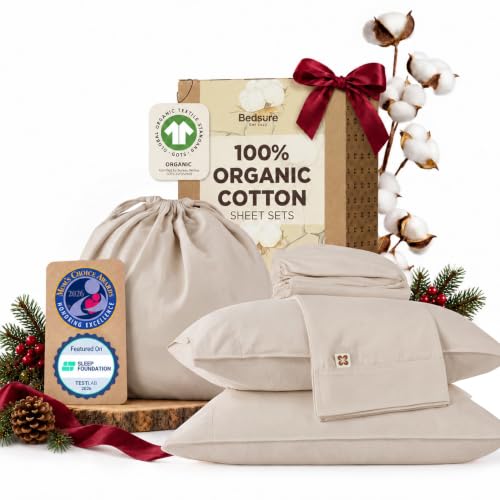
Bedsure’s set is the certified option on the cotton side: GOTS certified organic cotton with Fair Trade certification, woven in a smooth sateen. The 17-inch pocket is the deepest in this comparison, which makes it a practical pick for thick mattresses and toppers.
Specs
- Material: 100 percent organic cotton
- Weave: sateen
- Set contents: 4 pieces — flat sheet, fitted sheet, 2 pillowcases
- Size shown: Queen
- Fitted pocket: up to 17 inches deep
- Certifications: GOTS organic and Fair Trade Certified; OEKO-TEX Standard 100
- Tier: Mid-range
Pizuna Pure Cotton Sheet Set (Queen, White)

Pizuna’s set is the traditional hotel-style option: long staple combed cotton in a sateen weave at a stated 1000 thread count, giving the smoothest surface of the five sets here. The fitted sheet uses a 15-inch pocket, and the pillowcases run a generous 30 inches long.
Specs
- Material: 100 percent long staple combed cotton
- Weave: sateen
- Thread count: 1000, as stated by the manufacturer
- Set contents: 4 pieces — flat sheet, fitted sheet, 2 pillowcases
- Size shown: Queen, White
- Fitted pocket: 15 inches deep
- Pillowcase length: 30 inches
- Tier: Premium
Who Should Choose Linen
Choose linen if you sleep hot or live in a humid climate, because no common bedding fabric moves air and moisture better. Choose it if you keep bedding for a long time and would rather buy once at a higher tier than replace cheaper sets. Choose it if you like the relaxed, textured look and are untroubled by wrinkles. And choose it if you are willing to follow a gentler wash routine in exchange for fabric that softens and improves over the years. Of the three linen sets above, the SONORO KATE is the entry point, the Simple & Opulence set is the balanced middle, and the DAPU set is the premium Normandy flax option.
Who Should Choose Cotton
Choose cotton if you want softness and smoothness from the first night, with no break-in period. Choose it if your laundry routine is a standard hot wash and tumble dry and you do not want to think about fabric care. Choose it if you prefer a smooth, tailored bed with fewer wrinkles, or if you are furnishing a guest room where a familiar hotel feel matters. Long staple cotton, as in the Pizuna set, closes much of the durability gap with linen, while the Bedsure organic set adds certified sourcing and the deepest pocket in this comparison for tall mattresses.
FAQ
Is linen really cooler than cotton for hot sleepers?
Yes, based on the fibre structure. Flax fibres are hollow and the weave lets air circulate, while linen absorbs moisture and releases it quickly instead of holding it against the skin. Cotton breathes reasonably well in a percale weave, but the denser sateen weaves used in most smooth cotton sets hold more warmth. Hot sleepers generally find linen noticeably cooler across a whole night.
Does linen get softer over time?
Yes. Linen starts slightly crisp and softens gradually with each wash, which is the opposite pattern to many cotton sets that feel softest when new and thin with age. Stonewashed linen, such as the SONORO KATE set above, starts softer than untreated linen. Expect a few wash cycles before any pure linen set reaches its settled feel.
Which fabric lasts longer, linen or cotton?
Linen, on fibre strength alone. Flax is one of the strongest natural fibres used in bedding, and linen typically outlasts cotton in regular use while softening rather than wearing thin. Cotton lifespan varies widely: long staple and extra-long staple cotton sets resist pilling and last for years, while short staple cotton wears out much faster. Either fabric lasts longer with gentle washing and low-heat drying.
Can I mix linen and cotton bedding?
Yes, and many people do. A common combination is linen sheets for temperature control with a cotton duvet cover for a smoother surface, or the reverse. Just check the care labels, since linen prefers a cold gentle wash while cotton tolerates standard cycles, and wash the more delicate fabric according to its own instructions.
Conclusion
Linen and cotton are both natural, breathable, and comfortable; they simply peak in different places. Linen is the cooler, tougher, longer-lived fabric with a textured, relaxed look and a gentler care routine. Cotton is the smoother, softer-from-new fabric with easier care and options at every tier. Decide by how you sleep first — hot sleepers should start with linen, smooth-feel fans with cotton — then pick the set whose pocket depth and size match your mattress. Any of the five sets above is a sound example of its fabric, and the reference table below collects them in one place.