Key takeaways
- Silk pillowcase vs satin pillowcase compared on fiber, feel, hair and skin friction, breathability, care and durability, with five picks for each side.
- Top Pick: ZIMASILK 22 Momme Silk Pillowcase
- Runner-up: Fishers Finery 25 Momme Pure Mulberry Silk Pillowcase
- Also consider: ALASKA BEAR Silk Pillowcase
Silk and satin pillowcases sit side by side in the bedding aisle, look almost identical in photos, and promise the same smooth sleep surface. Yet they are not the same product. One is a natural protein fiber spun by silkworms; the other, in most bedding listings, is a synthetic fabric woven to imitate that shine. Choosing between them comes down to what the case is actually made of, how it breathes, how much care it needs, and how long you expect it to last.
This silk pillowcase vs satin pillowcase comparison breaks down the real differences first, then profiles five products you can buy today: three genuine mulberry silk cases and two polyester satin cases. Each pick lists its published specifications, so you can match a case to your hair type, your laundry habits, and your budget tier.
As an Amazon Associate, we earn from qualifying purchases.
Table of Contents
- The Short Answer
- Silk and Satin Are Not the Same Thing
- Head to Head: Feel and Friction
- Head to Head: Breathability and Sleep Temperature
- Head to Head: Care and Durability
- Head to Head: Value for Money
- The Silk Picks
- The Satin Picks
- Which One Should You Choose?
- FAQ
- Conclusion
The Short Answer
Choose real silk if you want a natural fiber that breathes, feels cool against the skin, and can last for years when it is washed gently. Choose satin, meaning polyester satin, if you want the same glossy look and a slippery surface for a fraction of the commitment, with easy machine washing and no delicate-fabric routine. Both surfaces create far less drag on hair and skin than standard cotton, which is why both are popular with people who wake up to frizz, tangles, or sleep creases. The difference is in the fiber itself, and that difference shows up most in temperature regulation, moisture behavior, and lifespan.
Silk and Satin Are Not the Same Thing
The most common source of confusion is the vocabulary. Silk is a fiber. Satin is a weave. A pillowcase earns the name silk only when it is made from silk fiber, and the benchmark for bedding is mulberry silk, produced by silkworms raised on mulberry leaves. Quality silk cases state the fiber grade, usually Grade 6A, and a momme weight, which measures the density of the silk fabric. Common pillowcase weights run from 19 momme at the lighter end to 25 momme and above for heavier, more durable cases.
Satin, by contrast, describes a weaving pattern that produces a glossy face and a dull back. Satin can technically be woven from silk, but the satin pillowcases sold at budget and mid-range tiers are woven from polyester filament. That is why their listings say things like similar to silk or silk-like. The fabric is smooth and shiny, but it is a plastic-based textile, not a natural protein fiber. Neither option is automatically better; they simply behave differently against skin, hair, and warm sleeping conditions.
Head to Head: Feel and Friction
Both fabrics are chosen for glide. Hair slides across silk and satin instead of catching, which reduces the mechanical stress that leads to breakage, split ends, and morning frizz. Skin also drags less, so the face is less likely to fold into deep sleep creases overnight.
There are still differences in hand feel. Silk has a soft, slightly warm, almost fluid drape, and its surface is smooth without feeling slick or plasticky. Polyester satin feels cooler and more slippery at first touch, with a higher-shine finish that reads as glossier on the bed. People with very dry or textured hair often prefer the gentler, less static-prone surface of silk, because polyester can build static in dry winter air. For pure slipperiness per dollar of effort, though, satin is remarkably close, which is why it dominates the budget tier.
Head to Head: Breathability and Sleep Temperature
This is where the natural fiber pulls ahead. Silk is breathable and helps regulate temperature: it feels cool in summer and does not turn clammy as the night warms up. It also absorbs a modest amount of moisture, which keeps the surface feeling dry against the skin.
Polyester satin does not breathe in the same way. The filament yarns and tight weave trap more heat, and the fabric absorbs almost no moisture, so perspiration stays on the surface. Hot sleepers and anyone in a warm bedroom may find satin clammy by morning, especially in larger sizes that wrap more of the pillow. If you sleep cool or keep the room cold, this matters less; if you run hot, it is the single strongest argument for real silk.
Head to Head: Care and Durability
Satin wins the laundry round easily. Polyester satin cases can go in a normal machine wash, resist wrinkling, and tolerate years of casual handling. They do not fade quickly and they dry fast.
Silk asks for more. Most silk pillowcases should be washed cold on a gentle cycle, ideally inside a mesh laundry bag, with a detergent made for delicates, then air dried away from direct sunlight. In exchange, a well-made silk case in a heavier momme weight is a long-lived item of bedding; the fibers are naturally strong, and a 22 or 25 momme case can stay smooth and intact for years under that gentle routine. Lighter 19 momme silk is more delicate and may thin sooner. Satin is not immortal either: polyester satin can snag on rough skin or jewelry, pill at friction points, and lose its sheen over time, but replacing it costs far less effort and money.
Head to Head: Value for Money
Satin pillowcases sit firmly in the budget tier, frequently sold in pairs, and they deliver most of the friction benefit that people buy these products for. Silk sits in the mid-range to premium tiers and is usually sold as a single case. The honest way to frame the value question is cost per year of use: a durable silk case washed gently can outlast several satin sets, while a satin set you replace without a second thought may suit you better if you like fresh colors often or do not want a special laundry routine. Vegan shoppers also land on the satin side, since polyester involves no silkworms at all.
The Silk Picks
ZIMASILK 22 Momme Silk Pillowcase

ZIMASILK is one of the most established names in this category, and its 22 momme case is the balanced pick: heavier and more durable than entry-level 19 momme silk, without reaching the premium tier. It is made from Grade 6A mulberry silk with a hidden zipper that keeps the pillow fully enclosed, and the fabric carries OEKO-TEX Standard 100 certification. The Standard size in Ivory suits most everyday pillows.
Specs
- Material: 100 percent mulberry silk, Grade 6A
- Momme weight: 22 momme
- Size: Standard, 20 x 26 inches (Queen and King also offered)
- Closure: Hidden zipper
- Certification: OEKO-TEX Standard 100
- Pack size: 1 pillowcase
- Tier: Mid-range
Fishers Finery 25 Momme Pure Mulberry Silk Pillowcase

Fishers Finery builds its case around weight and fiber quality: 25 momme of Grade 6A long-strand mulberry silk, with silk on both sides rather than a silk-and-cotton sandwich. The side-entry envelope closure is offset so the opening does not sit in the middle of your back or face. This is the premium option of the three silk picks and a past Good Housekeeping winner in this category, sized here in Queen in White.
Specs
- Material: 100 percent pure mulberry silk, Grade 6A long strand
- Momme weight: 25 momme
- Size: Queen, 20 x 30 inches (Standard and King also offered)
- Closure: Side-entry envelope
- Silk placement: Both sides
- Pack size: 1 pillowcase
- Tier: Premium
ALASKA BEAR Silk Pillowcase

ALASKA BEAR is the entry point into real silk. The case uses 19 momme Grade 6A mulberry silk, so it is lighter than the two picks above, but the fiber is genuine and the hidden zipper keeps the fit tidy. The Queen size in Ivory ships with a matching silk scrunchie, and the fabric is OEKO-TEX certified. It is a sensible first silk case if you want to find out whether the natural fiber suits your sleep before moving up a tier.
Specs
- Material: 100 percent mulberry silk, Grade 6A
- Momme weight: 19 momme
- Size: Queen, 20 x 30 inches
- Closure: Hidden zipper
- Extras: Matching silk scrunchie included
- Certification: OEKO-TEX Standard 100
- Pack size: 1 pillowcase
- Tier: Budget
The Satin Picks
Bedsure Satin Pillowcases, Set of 2
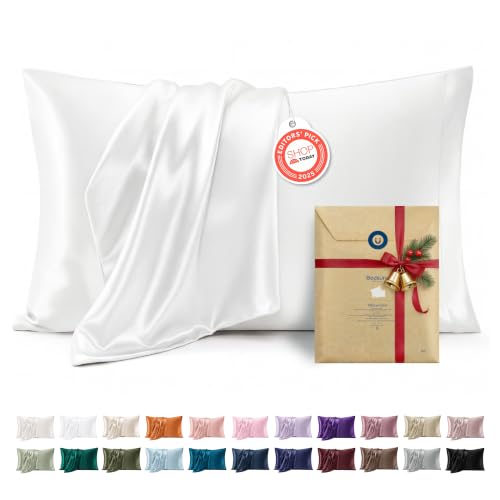
Bedsure sells the straightforward satin proposition: two queen-size cases in 100 percent polyester with an envelope closure, in a long list of colors including this Pure White set. The listing states a 300 thread count and simple machine-wash care. As a pair, the set covers both pillows on a bed for less commitment than a single silk case, which makes it the easiest way to try a smooth sleep surface.
Specs
- Material: 100 percent polyester satin
- Size: Queen, 20 x 30 inches
- Closure: Envelope
- Thread count: 300
- Care: Machine wash
- Pack size: 2 pillowcases
- Tier: Budget
Kitsch Satin Pillowcase with Zipper

Kitsch takes the same polyester satin fabric and adds the one feature most satin cases lack: a zipper. Where envelope satin cases can slide off a restless sleeper’s pillow, this case closes fully and stays put. It is sold singly in Standard size in Ivory, with a smooth, glossy finish aimed squarely at hair and skin care routines. Machine-washable care keeps it as low-maintenance as the Bedsure set.
Specs
- Material: Polyester satin
- Size: Standard, 19 x 26 inches (Queen and King also offered)
- Closure: Zipper
- Care: Machine washable
- Pack size: 1 pillowcase
- Tier: Mid-range
Which One Should You Choose?
Pick silk if you sleep warm, have dry or fragile hair, dislike static, or simply prefer natural fibers against your skin, and you are willing to wash one item gently. Within silk, the momme weight is your durability dial: 19 momme to start, 22 momme for the balance of softness and strength, 25 momme for the heaviest, longest-wearing fabric.
Pick satin if you want the glossy look and most of the glide at a budget tier, if your laundry routine has no room for delicates, if you want a matching pair on the bed right away, or if you avoid animal-derived fibers. Satin is also the lower-risk experiment: if a smooth case changes nothing for your hair or skin, you have spent very little to learn that.
FAQ
Is satin the same thing as silk?
No. Silk is a natural fiber, while satin is a type of weave. A satin pillowcase can be woven from silk, but the affordable satin cases in this comparison, and most satin bedding on the market, are made from polyester. Always check the material line on the listing: genuine silk cases state a mulberry silk fiber content and a momme weight.
Which is better for curly or frizzy hair, silk or satin?
Both reduce friction compared with cotton, so both help curls keep their shape overnight. Silk has two edges for textured hair: it generates less static than polyester, which matters for frizz in dry air, and it absorbs a little moisture rather than leaving hair either stripped or slick. Satin remains a strong budget alternative and is far better than cotton for curl definition.
Can a silk pillowcase go in the washing machine?
Most can, with conditions: cold water, a gentle or delicates cycle, a mesh laundry bag, and a mild detergent formulated for silk or delicates, followed by air drying out of direct sun. What shortens silk’s life is hot water, harsh detergents, bleach, and tumble drying. Satin polyester cases need none of these precautions and can follow your normal wash.
What does momme mean, and how much is enough?
Momme is the unit used to weigh silk fabric: the higher the number, the denser and heavier the silk. For pillowcases, 19 momme is the common starting point and feels light and cool, 22 momme adds noticeable body and durability, and 25 momme and above is the heavyweight end, chosen for longevity. If you toss and turn or wash your case weekly, the heavier weights are worth the higher tier.
Conclusion
The silk pillowcase vs satin pillowcase debate resolves once you look past the shine and read the fiber content. Real mulberry silk is the better sleep surface: breathable, temperature-regulating, gentle on hair and skin, and durable in heavier momme weights, at the cost of a higher tier and a gentler wash. Polyester satin is the pragmatic surface: nearly as slippery, far easier to wash, sold in affordable pairs, and free of animal fibers. Choose the fiber that matches your sleep temperature and your laundry habits, and either way your hair and skin get a smoother night than cotton offers.